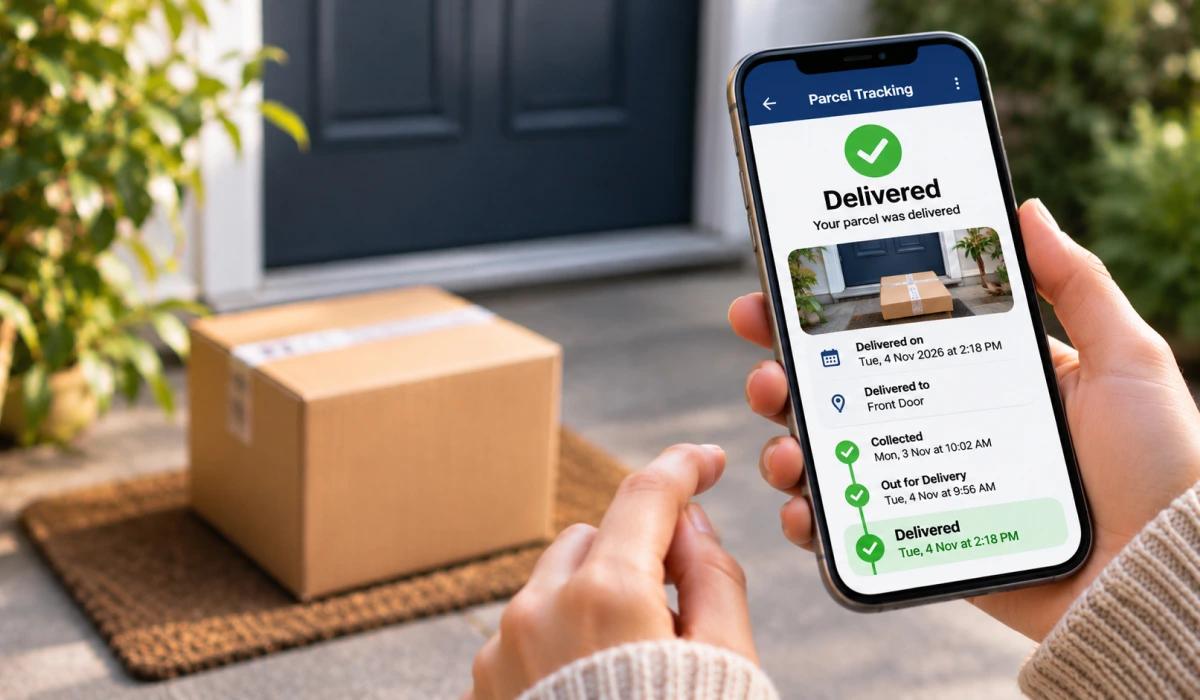
Few tracking updates land worse than "Delivered" when your hands are empty. The app is certain. Your doorstep is not. And the longer you stare at the word, the less helpful it gets.
The good news: most "delivered but missing" parcels turn up within a day or two, usually somewhere mundane. And when one genuinely is gone, UK law is clearer and more on your side than most people realise. Here is the exact order to do things in, whether you are the person waiting for the parcel or the seller who sent it.
First, the odds in your favour
Before assuming theft, know where these parcels actually turn out to be. In rough order of likelihood: with a neighbour who has not come round yet, in a "safe place" you did not know the driver chose (behind the bin is a classic), delivered to the wrong but similar address (14 instead of 14a), left with a building concierge or reception, scanned "delivered" early by a driver running behind who delivers it tomorrow, or signed for by someone else in your own household. Genuine disappearance sits at the bottom of that list.
That early-scan one surprises people, so it deserves a line: some drivers scan parcels as delivered at the end of a route they did not finish. It is against every carrier's rules, and it happens anyway. It is also why the single best first move is to wait 24 hours, however wrong that feels.
Step 1: Check the evidence in the tracking (10 minutes)
Open the full tracking detail, not just the status, and look for three things.
The delivery photo. Most UK couriers (Evri, DPD, Yodel, Royal Mail on many services, Amazon) now photograph the doorstep. Study it like a detective: is that your door? Your doormat? Your brick colour? A photo of a door that is not yours is the strongest evidence you can have, so save it.
The GPS pin or location note. DPD and some others record where the driver stood. A pin two streets away tells its own story.
The timestamp. Were you home at that moment? Did the doorbell actually ring? A "delivered at 14:32" while you sat by the window matters in a dispute.
Screenshot everything now. Tracking pages update and photos expire.
Step 2: Search the places drivers actually use (15 minutes)
Walk the property like a driver in a hurry: behind bins, inside porches, under doormats, in recycling boxes, behind planters, on top of meter boxes, inside an unlocked shed or greenhouse. Then the building spots: concierge, mail room, communal hallway shelf.
Then ask the neighbours, and not just the adjoining ones. Check the delivery note or app for a "left with neighbour" detail people miss, and ask the houses with your number on other nearby streets if the address is easily confused. A surprising number of these parcels are sitting politely in someone else's hallway awaiting collection.
Step 3: Report it to the right party, which is usually not the courier
Here is the part most people get wrong, and it costs them weeks.
If you bought the item from a shop or marketplace: your contract is with the retailer, not the courier. Under section 29 of the Consumer Rights Act 2015, goods remain at the trader's risk until they are in your physical possession. A tracking status saying "delivered" is not possession. If the parcel never reached you, the retailer must refund or replace; the courier dispute is the retailer's problem to have, not yours.
So report it to the seller in writing (email or order-page message, not a phone call you cannot evidence). Say plainly: the goods have not come into my physical possession, and under section 29 of the Consumer Rights Act 2015 I am asking for a replacement or refund. Attach your tracking screenshots and the delivery photo if it shows the wrong address. Give them a reasonable deadline, a week is fair, and stay polite and factual.
If you are the sender (you sold something on eBay or Vinted, or posted a gift): the claim goes to the courier, from you, because your contract is with them. Start the courier's "delivered but not received" investigation, supply the recipient's statement that nothing arrived, and claim against the service's inclusive or added cover. This is also the moment your pre-send habits pay off: the photos of the packed item, the receipt scan from the drop-off, the cover you added on a valuable item.
Marketplace sellers, one warning: refund through the platform's process, not informally. eBay and Vinted have defined flows for item-not-received cases, and stepping outside them loses you seller protection.
Step 4: If the retailer refuses or stalls
You still have gears left.
Chargeback. Paid by debit card or credit card? Ask your bank to reverse the transaction. Chargeback claims generally need to start within about 120 days of the expected delivery, so do not let a retailer run the clock out with "please allow another 10 working days" emails.
Section 75. Paid by credit card and the item cost over £100? Your card provider is jointly liable with the retailer under section 75 of the Consumer Credit Act, which is a more powerful route than chargeback and not time-boxed the same way.
Escalation. Many large retailers belong to alternative dispute resolution schemes, and persistent cases can go to small claims court, where filing is cheap and retailers rarely let it get that far. In practice, a clear written trail plus a chargeback threat resolves the overwhelming majority of cases before this point.
Report theft when it is theft. If the photo shows the parcel at your door and it vanished, that is doorstep theft: report it to the police on 101 or online and get a crime reference number, which strengthens every other claim you make.
Step 5: Make the next one harder to lose
A few habits quietly end this problem:
- Set a safe place you choose, in the courier's app, rather than letting a rushed driver improvise one. A named safe place also shifts the conversation if something goes missing from it.
- Redirect to a locker or shop when you will be out. Collection points do not have porch pirates.
- For valuable items, pick couriers with photo plus GPS proof (DPD is the benchmark) and signature services for the genuinely precious.
- Senders: always get the drop-off scan receipt and add cover to match value. The £2 difference in service is the entire dispute later.
Where ParcelMatch fits in this
When you book through Parcel Match, every parcel from every carrier lands on one tracking page, so "delivered where, exactly?" has one place to look instead of six. And because every service's cover level is shown before you book, matching protection to value takes a glance rather than a terms-and-conditions archaeology dig. When something does go wrong on a parcel you sent through us, the booking record, label, scans and cover are all in one account, which is exactly the paperwork a claim wants.
Frequently asked questions
My parcel says delivered but I never got it. Who refunds me?
If you bought the item, the retailer does: under the Consumer Rights Act 2015 the goods are at the trader's risk until you physically receive them. If you sent the item, you claim from the courier under the service's compensation cover.
How long should I wait before reporting it?
24 hours. A meaningful share of "delivered" parcels appear the next day because the status was scanned early. After 24 hours, report in writing without further delay, since courier investigation windows and chargeback deadlines run on a clock.
The delivery photo shows someone else's door. What now?
That is your strongest card. Save the photo, send it to the retailer (or courier, if you are the sender) with your report, and state that the evidence shows delivery to the wrong address. These cases resolve fastest.
A neighbour signed for it and denies having it. Where do I stand?
If you did not nominate that neighbour, delivery to them is not delivery to you, and the retailer remains responsible under section 29. Say exactly that, in writing.
Does "delivered" on tracking count as proof I received it?
No. Tracking is evidence the courier believes it delivered, not proof you possess the goods, and UK consumer law draws that distinction explicitly for purchased items.
Can I stop this happening again?
Mostly, yes: set your own safe place, redirect to lockers when out, use photo-proof couriers for valuables, and as a sender, keep drop-off receipts and match cover to item value.