How to Send a Bike in the UK: Boxes, Couriers and Costs
From finding a bike box to choosing a courier, here is how to prepare and send a bicycle across the UK.
PM Parcel Match·30 Oct 2026·8 min readShare this blog
Selling a bike on eBay feels great right up until the buyer lives in Aberdeen and you live in Plymouth. A bike is big, awkward, part-fragile and part-greasy, and it does not fit in a jiffy bag. Plenty of sales fall through at exactly this point because the seller assumes shipping will be a nightmare.
It is not. Thousands of bikes cross the UK by courier every week: sold bikes, bikes heading to university, bikes off to sportives and family visits. The senders who find it painless all follow the same steps. Here is the whole process, from finding a box to what happens if the buyer has an e-bike battery question.
The short answer
A boxed bike travels with the couriers that accept long parcels, typically costs £20 to £40 for UK mainland delivery on a 2 to 3 day service at the time of writing, and needs about an hour of prep the first time you do it. The three things that matter most: get a proper bike box, partially disassemble the bike so it fits, and if it is an e-bike, read the battery section below before you book anything.
Which couriers take bikes?
A boxed bike is a long parcel, so the deciding factor is each courier's maximum length. From the size limits we track across carriers:
Courier
Max length
Max weight
Boxed bike verdict
Parcelforce
250cm
30kg
Yes, the most generous limits for bikes
DPD
175cm
30kg
Yes, fits a standard bike box comfortably
UPS
274cm
30kg standard
Yes, strong for heavier e-bikes without batteries
Evri
120cm
15kg
No for most full-size bikes; the box is too long
Royal Mail
61cm most services
20kg
No, standard services are far too short
A standard bike box measures roughly 135cm x 75cm x 21cm, which is why the 120cm and 61cm limits rule out the budget favourites. Kids' bikes, BMXs and folding bikes are the exception: boxed small enough, they sometimes squeeze into standard services at standard prices, which is a genuine saving worth checking.
Book with the box dimensions, not the bike's. And measure your actual box, because bike boxes vary more than you would think.
What it costs
For a boxed full-size bike on UK mainland routes at the time of writing, expect roughly:
£20 to £30 on a 2 to 3 day service booked online through comparison rates
£25 to £40 for next-day services
A long-parcel supplement on some carriers, typically £3 to £10, already reflected in the quoted price when you enter honest dimensions
Walk-in and direct-website prices run meaningfully higher, same as every other parcel size, and the gap is bigger on awkward parcels. Comparing matters more for a bike than for a jumper: the spread between quotes for the same boxed bike is regularly £10 to £15.
One honest warning: enter the real dimensions at booking. Bikes are exactly the kind of parcel that gets machine-measured in the depot, and an undersized declaration earns a surcharge that erases everything you saved.
Where to get a bike box
The easiest sources, in order of effort:
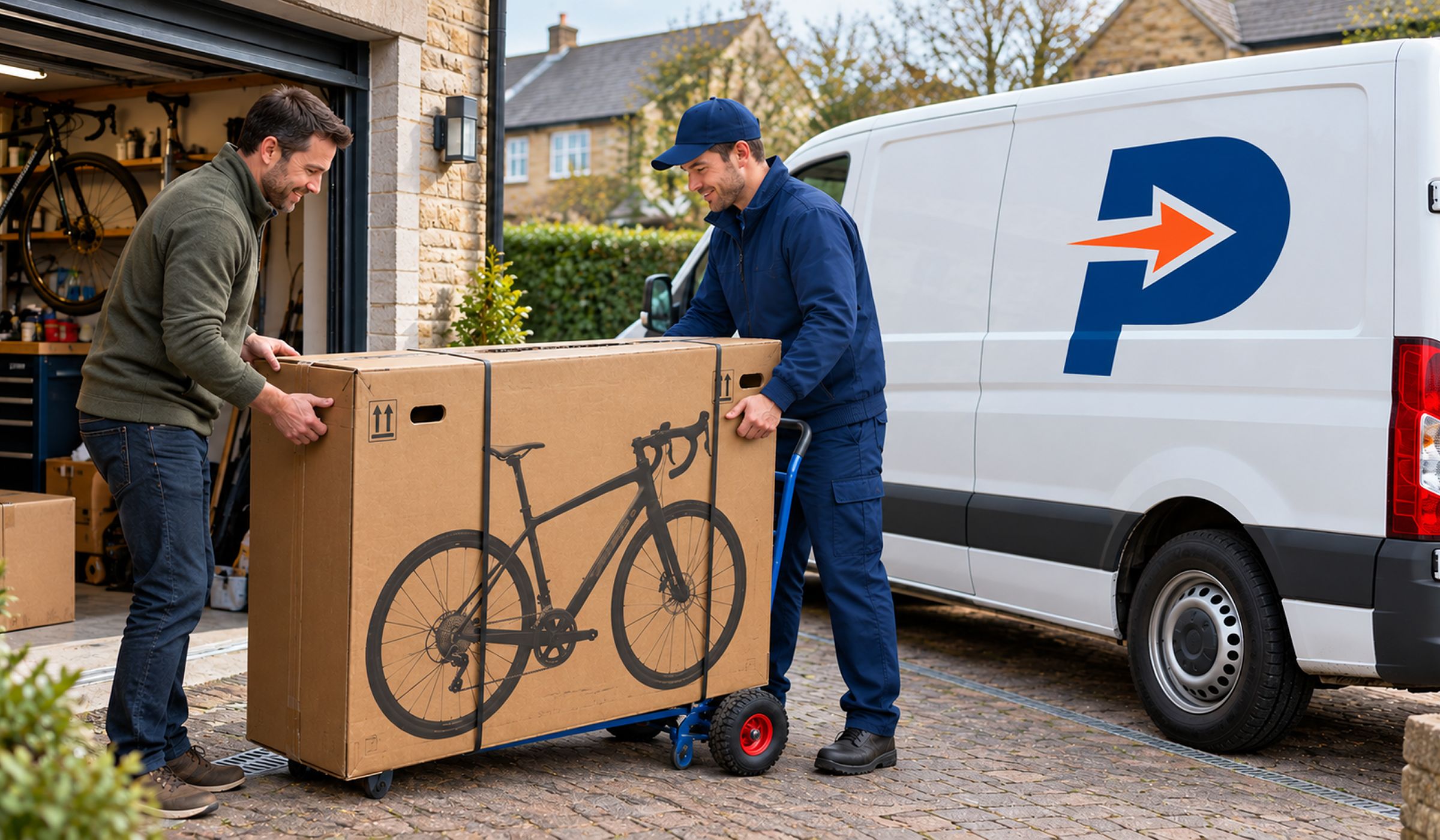
Your local bike shop. New bikes arrive in exactly the box you need, and shops flatten and recycle them constantly. Most will hand one over free or for a couple of pounds if you ask nicely. Ring ahead; the good boxes go fast.
Buy one online. Purpose-made bike shipping boxes cost £10 to £20 and come with the internal padding sorted. Worth it if you sell bikes regularly.
A bike bag or hard case if you already own one for travel. Check the courier accepts soft luggage; most prefer boxes, and a box protects better in a parcel network anyway.
Skip the temptation to bin-bag-and-bubble-wrap an unboxed bike. Most parcel couriers will refuse it at collection, and any that carry it will not cover damage.
How to pack a bike, step by step
First time takes about an hour. You will need Allen keys, pipe lagging or bubble wrap, zip ties and tape.
Clean it, then photograph it. A clean bike is easier to inspect for existing marks, and dated photos of the whole bike and the components are your evidence if you ever need a claim.
Remove the pedals. Left pedal unscrews clockwise, right pedal anticlockwise (the left one catches everyone out). Bag them with their washers.
Remove the front wheel. It slots beside the frame in the box. Put a plastic hub spacer (bike shops give these away) or a block of wood in the empty fork ends, because crushed forks are the classic bike-shipping injury.
Drop or remove the seatpost. Mark its height with tape first so the new owner gets your setup, or their old one back.
Turn or remove the handlebars. Loosen the stem, rotate the bars parallel with the frame, and pad where they touch. On drop-bar bikes, removing the bars from the stem entirely usually packs flatter.
Pad everything. Pipe lagging on the frame tubes is the cheap professional trick. Wrap the rear derailleur generously or unbolt it and zip-tie it inside the rear triangle; it is the most commonly broken part in transit.
Let a little air out of the tyres. Soft enough to give slightly, not flat. They cushion the wheels in the box.
Box it, fill the gaps, tape the seams. Nothing should shift when you rock the box. Small parts travel in a bag zip-tied to the frame, not loose in the box.
If all that sounds like a Saturday you would rather keep, most local bike shops will pack a bike for £15 to £30. For a valuable bike, professional packing is money well spent, and it strengthens any damage claim too.
E-bikes: the battery rule almost everyone hits
Here is the catch that surprises nearly every e-bike seller: standard UK parcel couriers do not carry lithium e-bike batteries. They are classed as dangerous goods, and moving them legally through a parcel network requires certified packaging and paperwork that consumer services do not offer.
What that means in practice:
Remove the battery and send the e-bike itself as a normal (heavy) bike. That part is fine.
The battery travels separately via a specialist dangerous-goods carrier, or the buyer collects it, or you sell locally with battery handover in person.
Do not quietly box the battery in with the bike. If it is found, the parcel is stopped; if something goes wrong, there is no cover and potentially real liability.
Check the e-bike's boxed weight without the battery too. Many still land in the 20kg to 30kg range, which keeps them with Parcelforce, DPD or UPS rather than lighter-limit services.
Booking and sending day
With the bike boxed, the rest is an ordinary large parcel. Enter the box dimensions and weight, compare, and book collection rather than drop-off: bike boxes exceed most ParcelShop and locker size limits, and hauling one through town is a two-person comedy sketch anyway.
Add cover to match the bike's value. Inclusive compensation of £20 to £25 does not do much for an £800 gravel bike, and upgrading cover typically costs a small fraction of the delivery price.
Then the usual collection rules apply: packed and labelled before the window opens, delivery notes if your address is awkward, and keep the collection confirmation until the buyer has it in hand.
Typically £20 to £40 for UK mainland delivery of a boxed bike at the time of writing, depending on speed, size and carrier. Compare live quotes with your actual box dimensions for a real price.
Which courier is best for sending a bike?
Parcelforce, DPD and UPS all take standard bike boxes, with Parcelforce offering the most generous length limit at 250cm. The best price on the day varies, which is why comparing wins.
Can I send a bike without a box?
Practically, no. Most parcel couriers refuse unboxed bikes, and damage to an unpackaged item is not covered. Get a bike box from a local shop or buy one for £10 to £20.
Do I have to take my bike apart to ship it?
Partially. Pedals off, front wheel out, seatpost down, bars turned or removed. It is an hour with Allen keys the first time, or £15 to £30 at a bike shop if you would rather not.
Can I send an e-bike by courier?
The bike, yes; the lithium battery, no, not on standard parcel services. Remove the battery and arrange it separately through a specialist carrier or in-person handover.
Can I send a kids' bike more cheaply?
Often, yes. Boxed small enough, kids' bikes and folding bikes can fit standard parcel size limits and standard prices. Measure the box and compare; it can halve the cost.
Note: Prices and size limits are correct at the time of writing (September 2026) and change regularly. Run a live comparison with your boxed dimensions before booking.