Parcel Collection vs Drop-Off: Which Should You Pick?
Drop your parcel at a shop or locker, or have a courier collect it from your door? Compare 2026 costs, cut-off times and when each option actually makes sense for UK senders.


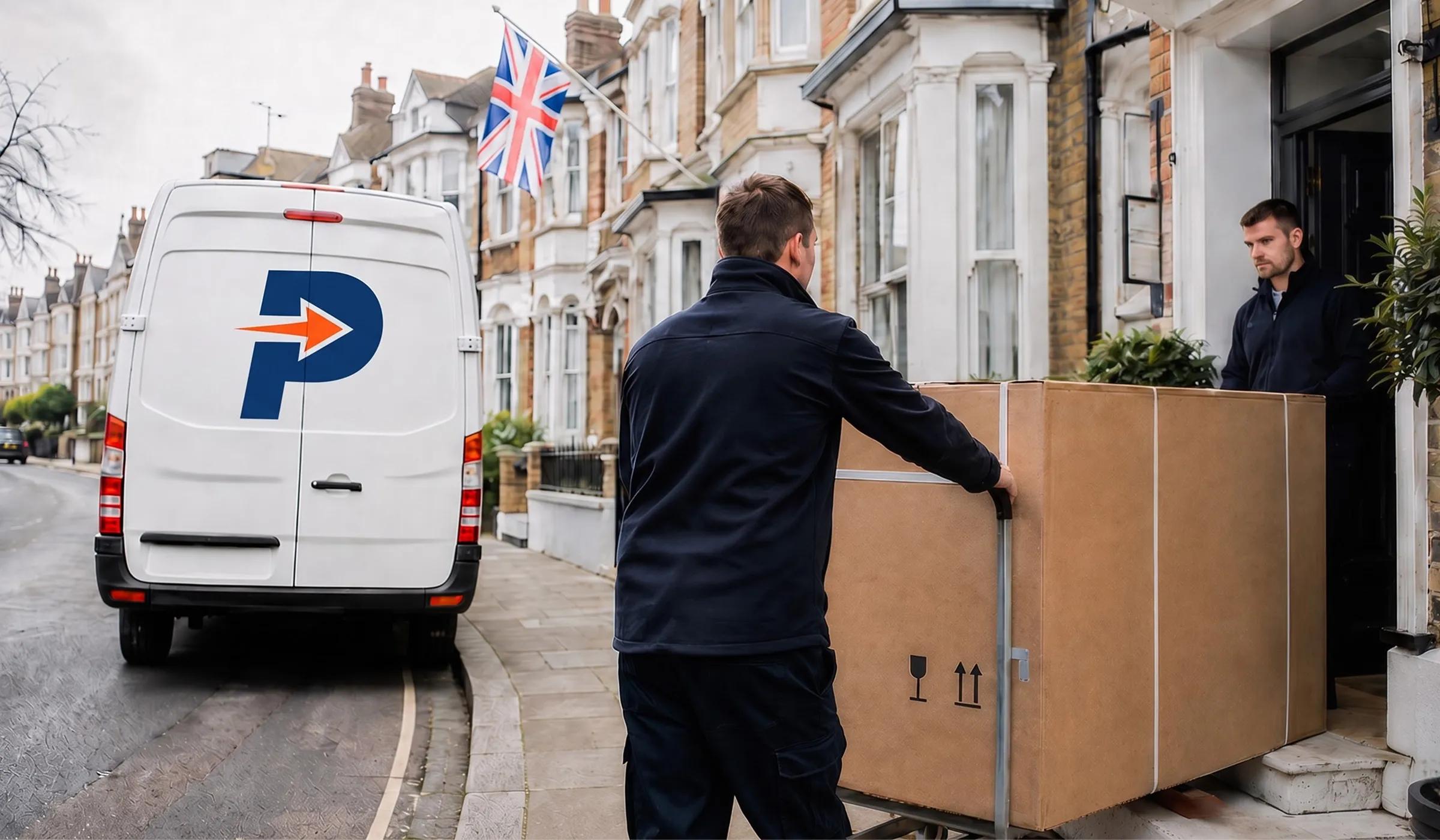
Sending a big parcel in the UK feels harder than it should. Every courier draws the line between “standard” and “large” in a different place, prices jump sharply once you cross it, and the surcharges for getting your measurements wrong can cost more than the delivery itself.
We compare large parcel rates across 9+ UK carriers every day, and the pattern is always the same: the senders who overpay are not choosing bad couriers. They are choosing the wrong courier for that specific parcel, or paying walk-in prices for something that costs half as much online. This guide sorts out what actually counts as a large parcel in 2026, what it should cost, and how to book it without the nasty extras.
There is no single UK definition, which is most of the problem. Each carrier sets its own thresholds, and a parcel that is “standard” for one is “large” or even refused by another.
As a rough rule, you are in large parcel territory once your box passes any of these:
Here is where the main carriers draw their lines in 2026:
| Carrier | Max weight (standard services) | Max length | Worth knowing |
|---|---|---|---|
| Evri | 15kg | 120cm | Combined length and girth capped at 245cm |
| DPD | 30kg | 175cm | Parcels over 70cm long count as large |
| Parcelforce | 30kg | 250cm | The most generous length limit on the high street |
| UPS | 30kg standard, up to 70kg on some services | 274cm | Strong for very heavy single boxes |
| Royal Mail | 20kg | 61cm on most services | Small parcel limits bite quickly, watch the correction charges |
Measure after packing, not before. The box, the tape and the bubble wrap all count.
Two things drive the cost of a large parcel: weight and space. Carriers charge you for whichever is greater.
Actual weight is simple: what the parcel weighs on a scale.
Volumetric weight is the one that surprises people. Couriers calculate it from your parcel's dimensions, typically length x width x height in centimetres divided by 4,000 or 5,000 depending on the carrier. A big box of pillows might weigh 3kg on the scale but measure like a 12kg parcel, and you pay for the 12kg version because it takes up van space that could have carried something heavier.
The practical lesson: for bulky-but-light items, a smaller box is the biggest saving available. Cutting 10cm off each side of a large box can drop the volumetric weight by several kilos and move you down a whole pricing tier.
Prices move constantly, so treat these as honest ballparks for UK mainland deliveries booked online, not counter rates.
The gap between online and walk-in pricing grows with parcel size. On small parcels the difference is pennies to a pound or two. On a 25kg box it is regularly 50% or more. If you take one thing from this guide, take that: never pay the counter rate for a large parcel.
Also worth knowing: since 7 April 2026, Royal Mail applies an £11 correction charge on Tracked 24 and Tracked 48 items that exceed their size or weight limits. Other carriers run similar audit surcharges. Every parcel gets scanned, measured and weighed by machine now, so honest measurements are not just good manners. They are cheaper.
The honest answer changes with the parcel, but here is how it usually shakes out.
DPD is the pick for valuable or time-sensitive large parcels. Up to 30kg, 175cm, with a one-hour delivery window texted to the recipient. You pay a little more for a lot more certainty.
Parcelforce handles the awkward stuff. With a 250cm length limit it takes items most couriers refuse, and its 48-hour large parcel services are usually the value option at the very top end of the weight range.
Evri is worth a quote for large-ish parcels that stay under 15kg. Its network is huge and prices are keen, but the 15kg cap rules it out for genuinely heavy boxes.
UPS shines for very heavy single items and business freight, with some services taking parcels up to 70kg where a two-person lift is involved.
The right answer for your parcel depends on its exact size, weight, destination and deadline. That combination changes which carrier wins, which is why comparing live rates beats loyalty to any single courier.
Large parcels have a harder life than small ones. They ride at the bottom of the stack, they get moved by conveyors, and their own weight works against them. A few rules from watching what actually survives:
Use double-walled boxes. Single-wall supermarket boxes fold under 15kg of books. Double-wall cartons cost a pound or two and hold their shape.
Fill every gap. A heavy item moving inside its box becomes a battering ram. Pack tight with paper, foam or cardboard inserts until nothing shifts when you shake it.
Tape like you mean it. The H-taping method (one strip along the seam, one across each end) on top and bottom. Heavy boxes fail at the flaps first.
Reinforce the corners. Corners take the knocks. Extra cardboard pads on each corner cost nothing and prevent the most common damage.
Two-box anything fragile. For valuable fragile items, box the item, float it in void fill inside a second, larger box. This is what “professionally packed” actually means.
Label flat, on the top face. Wrapped-around-the-edge labels fail barcode scans, and a parcel that cannot be scanned is a parcel that gets delayed.
For furniture, white goods and anything over 30kg, you are past parcel networks and into two-person courier services or pallet delivery. If a parcel needs two people to lift safely, do not force it into a one-person network. It ends badly for the parcel and occasionally for the driver.
For small parcels we usually recommend drop-off to save money. Large parcels flip that advice.
Most drop-off points (lockers, ParcelShops, corner shops) cap what they accept at around 15kg to 25kg, and hauling a 20kg box through a shop door is nobody's idea of a good morning. For genuinely large parcels, home collection is often mandatory anyway, and where it is optional, the extra £1 to £3 is usually worth it.
Book a collection, have the parcel packed and labelled before the driver arrives, and put a note on your calendar for the collection window. Missed collections are the most common delay we see on large parcel orders.
If you are an eBay trader, a furniture upcycler or a small brand shipping bulky products weekly, per-parcel pricing stops being the right way to buy postage.
Volume unlocks account pricing, and the difference on large parcels is bigger than on small ones. Through Parcel Match business accounts, regular senders get negotiated rate cards, bulk CSV upload for up to 200 parcels at once, and a prepay wallet so labels take one click instead of one checkout. Monthly statements keep your bookkeeper happy too.
Even at modest volume, ten large parcels a month, account rates typically pay for themselves several times over.
Every claim in this guide comes back to one habit: run the comparison. Enter your postcodes and parcel details into Parcel Match and we pull live large parcel rates from DPD, Parcelforce, Evri, UPS and more in one search, sorted by price, with the carrier rate, our small fixed fee and VAT shown before you pay.
Large parcels are exactly where a 30-second comparison earns its keep. The spread between the cheapest and dearest quote on a 20kg box is rarely less than £10. That is not a rounding error. That is lunch. Compare large parcel rates.
Anything over roughly 61cm on its longest side or heavier than 10kg to 15kg, though every carrier draws the line differently. Evri caps standard parcels at 15kg and 120cm, DPD at 30kg and 175cm, Parcelforce at 30kg and 250cm.
Book online through negotiated rates rather than paying at a counter, compare carriers for your exact size and weight, and keep the box as small as safely possible to beat volumetric pricing. For 20kg to 30kg, DPD, Parcelforce and UPS usually price best.
Often not. Most lockers and ParcelShops cap parcels around 15kg to 25kg and standard door sizes. For genuinely large parcels, book a home collection.
It gets measured by machine and you get a surcharge. Royal Mail's correction charge is £11 per item on tracked returns since April 2026, and other carriers charge similar audit fees. Measure the packed box and round up.
Around 30kg is the practical ceiling for one-person parcel networks. Beyond that, look at two-person delivery services or pallet freight, both of which are different services with different pricing.
Usually the same £20 to £25 inclusive cover as small parcels, which is rarely enough for furniture or electronics. Add cover to match the item's value; on a large parcel it is a small percentage of the total cost.
Drop your parcel at a shop or locker, or have a courier collect it from your door? Compare 2026 costs, cut-off times and when each option actually makes sense for UK senders.
A practical guide to small business parcel delivery in the UK. Cut postage costs, pick the right couriers, handle returns and claims, and set up shipping that scales with your orders.
Find the cheapest way to send a parcel in the UK. Real 2026 prices from Royal Mail, Evri, InPost, Yodel and DPD, compared side by side, with tips that actually cut your postage bill.